
Table of Contents
ToggleArtificial Intelligence (AI) is transforming the digital advertising landscape faster than ever before. With increasing data availability, smarter algorithms, and advanced automation tools, AI is reshaping how brands reach, engage, and convert their audiences. Businesses today are no longer relying solely on manual campaign management or traditional targeting strategies. Instead, AI-powered systems analyze massive amounts of data, predict user behavior, and optimize advertising campaigns in real time.
For digital marketing agencies like Niction Tech, AI-driven strategies are becoming essential for delivering performance-focused campaigns that combine creativity with data-driven insights. As we move into 2026, the role of AI in digital marketing and advertising will only grow stronger, enabling brands to create more personalized, efficient, and scalable campaigns.
In this blog, we explore the future of AI in digital advertising, its benefits, emerging trends, challenges, and how businesses can leverage AI to stay ahead in an increasingly competitive digital ecosystem.
What is AI in Digital Advertising?
AI in digital advertising refers to the use of artificial intelligence technologies—such as machine learning, predictive analytics, and automation—to plan, execute, and optimize advertising campaigns.
Traditional digital advertising relies heavily on manual decision-making. Marketers analyze campaign performance, adjust targeting, optimize budgets, and test creatives manually. AI changes this process by allowing algorithms to process large volumes of data instantly and make intelligent decisions faster than humans.
AI systems can analyze user behavior, browsing patterns, demographic information, and engagement data to determine which ads should be shown to which audiences. Machine learning models continuously learn from campaign performance and automatically adjust targeting, bidding strategies, and ad placements to improve results.
AI also powers automated advertising platforms like programmatic advertising systems. These platforms buy and place ads in real time, ensuring that ads reach the right audience at the right time with minimal human intervention.
As a result, AI in digital advertising helps marketers run smarter campaigns that deliver better results with less manual effort.
How It Fits with AI in Digital Marketing
To understand the full impact of AI in advertising, it’s important to see how it fits within the broader ecosystem of AI in digital marketing.
Digital marketing includes several channels such as search engine optimization (SEO), social media marketing, content marketing, email marketing, and paid advertising. AI is now playing a role across all of these channels.
For example, AI tools can analyze search trends for SEO, automate email marketing campaigns, generate content ideas, and predict customer behavior across platforms. When it comes to advertising specifically, AI focuses on campaign performance, targeting, and ad optimization.
In this sense, AI in digital advertising is a specialized part of AI in digital marketing. It focuses on improving paid media campaigns, ensuring that ad budgets are used efficiently while delivering higher engagement and conversions.
At agencies like Niction Tech, integrating AI across marketing channels allows brands to build smarter, more connected digital strategies that drive measurable growth.
Benefits of AI in Digital Advertising
Smarter Audience Targeting
One of the biggest advantages of AI in digital advertising is its ability to identify the right audience. AI algorithms analyze user behavior, interests, purchase history, and engagement patterns to create highly accurate audience segments.
This means advertisers can target users who are most likely to convert, reducing wasted ad spend and increasing campaign efficiency.Real-Time Optimization
AI systems continuously monitor campaign performance and adjust variables such as bids, targeting, and placements in real time. This ensures that advertising campaigns remain optimized without constant manual intervention.
Instead of waiting for weekly reports, marketers can rely on AI to make immediate adjustments that improve campaign performance.Automated Content Creation
AI tools can generate ad headlines, descriptions, images, and even video content. While human creativity remains essential, AI can assist in producing multiple variations of ads quickly for testing and optimization.
This speeds up the creative process and allows marketers to experiment with different messaging strategies.Better ROI Measurement
AI-powered analytics tools provide deeper insights into campaign performance. They track conversions, customer journeys, and engagement metrics more accurately than traditional reporting systems.
By analyzing these insights, marketers can better understand what works and allocate budgets more effectively.Dynamic Creatives & Adaptive Messaging
AI enables dynamic ad creatives that automatically adapt to different users. For example, the same ad can display different images, messaging, or product recommendations depending on the user’s behavior or preferences.
This level of personalization significantly improves engagement and conversion rates.
AI Trends in Digital Advertising 2026
AI-Powered Creative Generation
AI tools are increasingly capable of generating high-quality ad creatives including images, videos, and copy. In 2026, brands will use AI to produce creative variations at scale while maintaining consistency in messaging and branding.
Predictive Audience Modeling
Predictive modeling allows AI to identify potential customers before they even show clear buying intent. By analyzing historical data and behavioral patterns, AI can forecast which users are likely to convert in the future.
This allows advertisers to reach high-value audiences earlier in their decision-making process.Autonomous Campaign Optimization
AI-powered systems are moving toward fully autonomous campaign management. These systems can automatically allocate budgets, optimize bidding strategies, and adjust targeting based on real-time data.
This reduces manual campaign management and allows marketers to focus on strategy and creativity.AI Role in Campaign Automation
Automation will become a core component of advertising strategies. AI can manage campaign scheduling, ad placement, and performance tracking across multiple platforms simultaneously.
This ensures consistent campaign performance while saving time and resources.Interactive Ad Formats
AI will also power more interactive advertising experiences. Chatbots, personalized video ads, and interactive content formats will allow users to engage directly with advertisements.
These interactive experiences improve engagement and create more memorable brand interactions.Cross-Channel AI Coordination
In 2026, AI will play a major role in coordinating campaigns across multiple platforms, including Google Ads, social media, programmatic networks, and streaming platforms.
AI systems will ensure consistent messaging and optimize ad placements across all channels simultaneously.
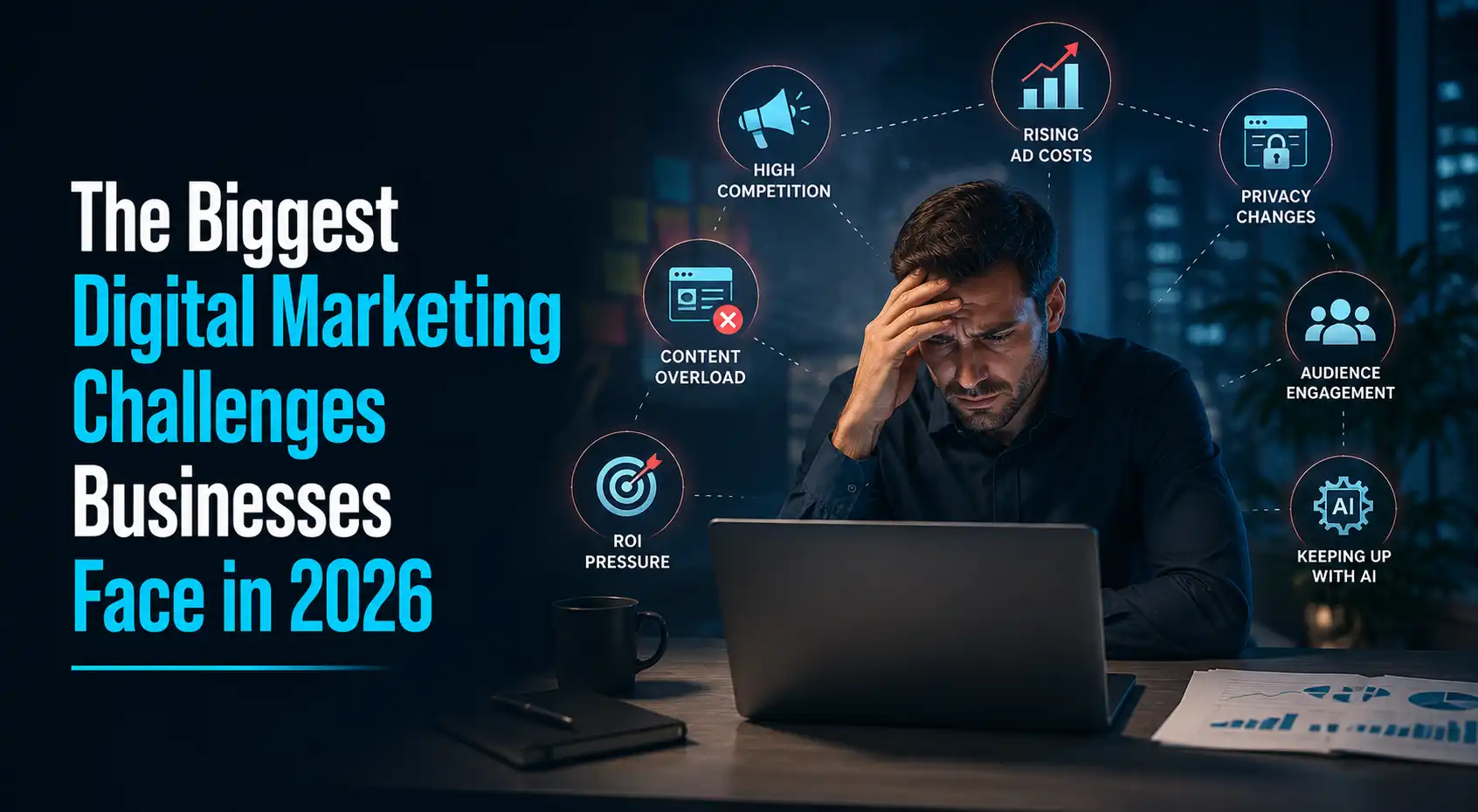
Challenges Marketers Face with AI in Digital Advertising
Despite its advantages, AI in advertising also presents several challenges.
Data privacy and regulations are among the biggest concerns. With stricter data protection laws and limitations on third-party cookies, advertisers must find new ways to collect and use customer data responsibly.
Another challenge is data quality. AI systems rely on large datasets to function effectively. Poor or incomplete data can lead to inaccurate targeting and ineffective campaigns.
There is also a skills gap in the industry. Many marketers lack the technical knowledge required to fully utilize AI-powered advertising tools.
Finally, over-reliance on automation can sometimes reduce creative originality. Successful campaigns still require human creativity, strategic thinking, and emotional storytelling.
The Future of AI in Digital Advertising
The future of AI in digital advertising will be defined by deeper personalization, smarter automation, and more predictive marketing strategies.
AI will enable brands to deliver highly personalized ads tailored to individual users. Instead of broad targeting, advertisers will focus on micro-segments and personalized experiences.
Campaign management will also become more automated. AI systems will handle complex optimization tasks, allowing marketers to focus on creative strategy and brand storytelling.
For digital marketing agencies like Niction Tech, combining AI-driven insights with human creativity will be the key to delivering high-performing advertising campaigns. As AI technology evolves, businesses that adopt AI-powered strategies early will gain a significant competitive advantage.
Conclusion
Artificial Intelligence is reshaping the way brands approach digital advertising. From smarter audience targeting to real-time campaign optimization, AI is helping marketers create more efficient, personalized, and scalable advertising strategies.
As we move toward 2026, the role of AI in digital marketing and advertising will continue to expand. Emerging technologies such as predictive modeling, autonomous campaign management, and AI-generated creatives will redefine how brands connect with their audiences.
However, while AI offers powerful tools, the most successful campaigns will still combine data-driven intelligence with human creativity and strategic thinking.
Businesses that embrace AI today will be better prepared for the future of digital advertising.
FAQs
Key benefits include smarter audience targeting, real-time campaign optimization, automated content creation, improved ROI measurement, and personalized ad experiences.
Challenges include data privacy concerns, dependence on high-quality data, technical skill gaps, and the need to balance automation with creative strategy.
No. AI will support marketers by automating repetitive tasks and providing insights, but human creativity, strategy, and emotional storytelling remain essential.
Major trends include AI-powered creative generation, predictive audience modeling, autonomous campaign optimization, interactive ads, and cross-channel AI coordination.
Businesses can adopt AI-powered marketing tools, invest in data analytics, integrate automation platforms, and partner with experienced digital marketing agencies to implement AI-driven strategies effectively.