
Table of Contents
ToggleCategory
- Blog
- Branding
- Digital Marketing
- Graphic Design
- Nictiontech
- Real Estate
- Social Media Marketing
- Video Marketing
- Video Production
- Website Design
Recent Posts
- 5 Hidden Metrics That Prove Your Ads Are Suffering from Creative Fatigue
- How Al Is Changing Digital Marketing Services in India
- Performance Marketing for Real Estate Property: Leads, Ads & ROI
- How to Get Your Brand Mentioned in ChatGPT and AI Search Results
- How Real Estate Brands Can Use Reels & Shorts to Sell Properties
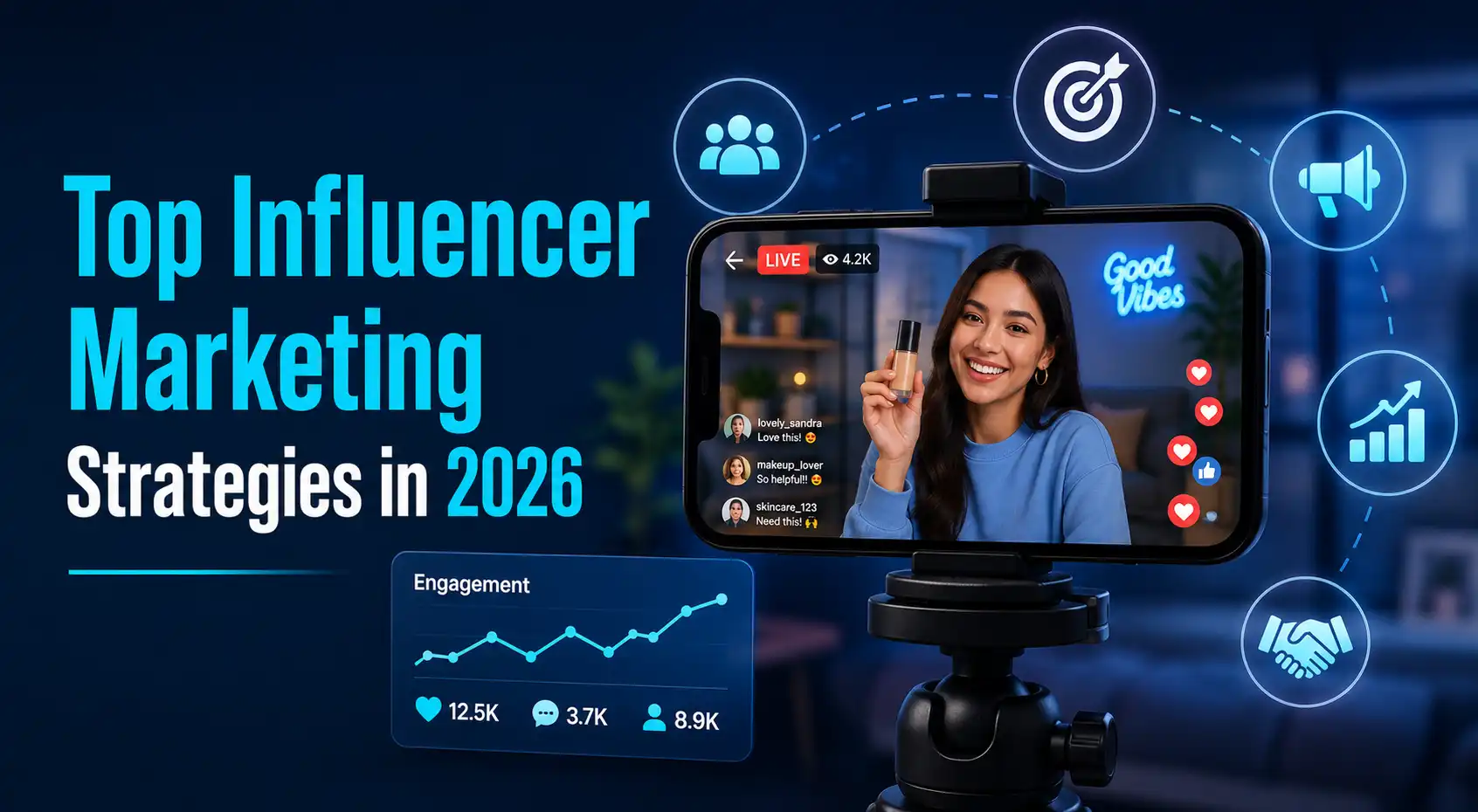
Marketing in 2026 is no longer about who speaks the loudest—it’s about who connects the deepest. Consumers are scrolling faster, skipping ads quicker, and trusting people more than brands. This shift has made influencer marketing on social media one of the most powerful tools for modern businesses.
But influencer marketing today is not just about sending products to creators or paying for posts. It requires a well-planned influencer strategy, smart platform selection, and a clear understanding of audience behavior. With the rise of advanced tools, brands are now using an influencer marketing platform to track performance, manage collaborations, and optimize results.
From niche creators to large-scale campaigns, 2026 is all about authenticity, data, and long-term impact. In this blog, we break down what actually works in influencer marketing today—and how brands can build strategies that deliver real results.
What is Influencer Marketing and Why It Matters in 2026
Influencer marketing is no longer just a promotional tactic—it has become a trust-building channel. Instead of brands talking directly to consumers, they collaborate with creators who already have a strong connection with their audience.
In 2026, attention is scarce, and trust is currency. People are more likely to buy from someone they follow and relate to rather than from a brand advertisement. This makes influencer marketing highly effective for building credibility and driving conversions.
The real value of influencer marketing lies in its ability to humanize a brand. It turns marketing into conversations rather than advertisements.
Types of Influencers: Mega, Macro, Micro, and Nano
Not all influencers deliver the same results. The key is not choosing the biggest influencer—but the right one.
- Mega influencers have massive reach and are ideal for brand awareness. However, they often come with a high influencer marketing cost and lower engagement rates.
- Macro influencers offer a balance between reach and influence. They are suitable for campaigns that aim to scale visibility while maintaining audience connection.
- Micro influencer marketing is where real engagement happens. These creators have smaller but highly loyal audiences, making them more effective for conversions.
- Nano influencers are often underestimated but highly impactful for local or niche campaigns. Their audience trusts them deeply, which makes their recommendations more powerful.
In 2026, brands are shifting from “bigger is better” to “more relevant is better.”
Top Influencer Marketing Strategies for 2026
Influencer marketing is evolving rapidly, and brands need smarter strategies to stay ahead.
- Leveraging Emerging Technologies
AI is now playing a key role in influencer marketing. From identifying the right creators to predicting campaign performance, brands are relying on data more than intuition. A good influencer marketing platform helps streamline this process and improve campaign efficiency. - Focus on Authenticity and Transparency
Audiences today can instantly identify forced promotions. The most successful campaigns are those that feel natural and genuine. Brands need to collaborate with influencers who actually believe in their product or service.
Authenticity is no longer optional—it is the foundation of successful campaigns. - Long-Term Partnerships Over One-Time Campaigns
One-off collaborations may create visibility, but long-term partnerships create trust. When an influencer consistently promotes a brand, it strengthens credibility and builds stronger recall. This is one of the most effective long-term influencer strategies in 2026. - Rise of Micro and Niche Influencers
Micro influencer marketing is dominating because of its ability to deliver better engagement and targeted reach. Brands are now focusing on niche creators who speak directly to specific audiences. Instead of reaching millions, brands are focusing on reaching the right thousands. - Diversification Beyond Instagram
While Instagram remains a key platform, brands are expanding their presence across multiple channels. A strong Instagram influencer marketing strategy combined with YouTube, LinkedIn, and short-form video platforms creates a more balanced approach.Each platform serves a different purpose in the customer journey. - Data-Driven Decision Making
Guesswork no longer works. Brands are analyzing engagement rates, conversion data, and audience insights to refine their campaigns. Data is what separates average campaigns from high-performing ones. - Influencer Marketing Cost & Smart Budget Planning
Understanding influencer marketing cost is critical. Instead of spending large budgets on a single influencer, many brands are distributing budgets across multiple micro-influencers to maximize impact. Smarter allocation leads to better ROI.
How Influencer Marketing Works on Social Media Platforms
Influencer marketing works because it blends content with communication. Instead of interrupting users with ads, it integrates brand messaging into content they already enjoy.
On Instagram, influencers use reels, stories, and posts to showcase products in a natural way. YouTube creators provide detailed reviews, while LinkedIn influencers focus on professional storytelling. A well-planned social media influencer marketing strategy ensures that content feels organic rather than promotional.
Key Metrics to Measure Influencer Marketing Success
Success in influencer marketing is not just about likes or followers. It’s about impact. Brands should focus on engagement quality, audience interaction, website traffic, and actual conversions. Tracking these metrics helps understand whether the campaign is driving real business results. Measuring ROI is essential to refining future strategies and improving performance.
How to Choose the Right Influencer for Your Brand
Choosing the right influencer is more about alignment than popularity. Brands should evaluate whether the influencer’s audience matches their target market. Content style, engagement quality, and credibility matter more than follower count. A reliable influencer marketing platform can help analyze these factors and make better decisions.
The right influencer doesn’t just promote your brand—they represent it.
Common Mistakes to Avoid in Influencer Marketing
Many brands fail not because influencer marketing doesn’t work, but because they approach it incorrectly. One common mistake is focusing only on follower numbers instead of engagement. Another is ignoring authenticity, which can damage brand trust.
Brands also often fail to track performance, making it difficult to understand campaign effectiveness. Short-term thinking is another issue. Building relationships with influencers delivers far better results than one-time collaborations.
Case Studies: Successful Influencer Marketing Campaigns
Successful campaigns share a common pattern—they feel real. Brands that collaborate with micro-influencers often see better engagement because the content feels relatable. Campaigns that focus on storytelling rather than selling tend to perform better. The most effective campaigns are those where the brand message blends seamlessly into the content.
Future Predictions for Influencer Marketing Beyond 2026
The future of influencer marketing will be shaped by personalization and technology. AI will continue to improve campaign targeting and performance tracking. Virtual influencers and AI-generated content may become more common. At the same time, audiences will demand even more authenticity. Brands that balance technology with human connection will lead the next phase of influencer marketing.
Conclusion
Influencer marketing in 2026 is not about visibility—it’s about connection, trust, and relevance. Brands that focus on building genuine relationships, using data-driven strategies, and collaborating with the right creators will see the best results.
A strong influencer strategy, supported by the right influencer marketing platform, can help businesses create meaningful engagement and long-term brand value. The future belongs to brands that are not just seen—but remembered.