
Table of Contents
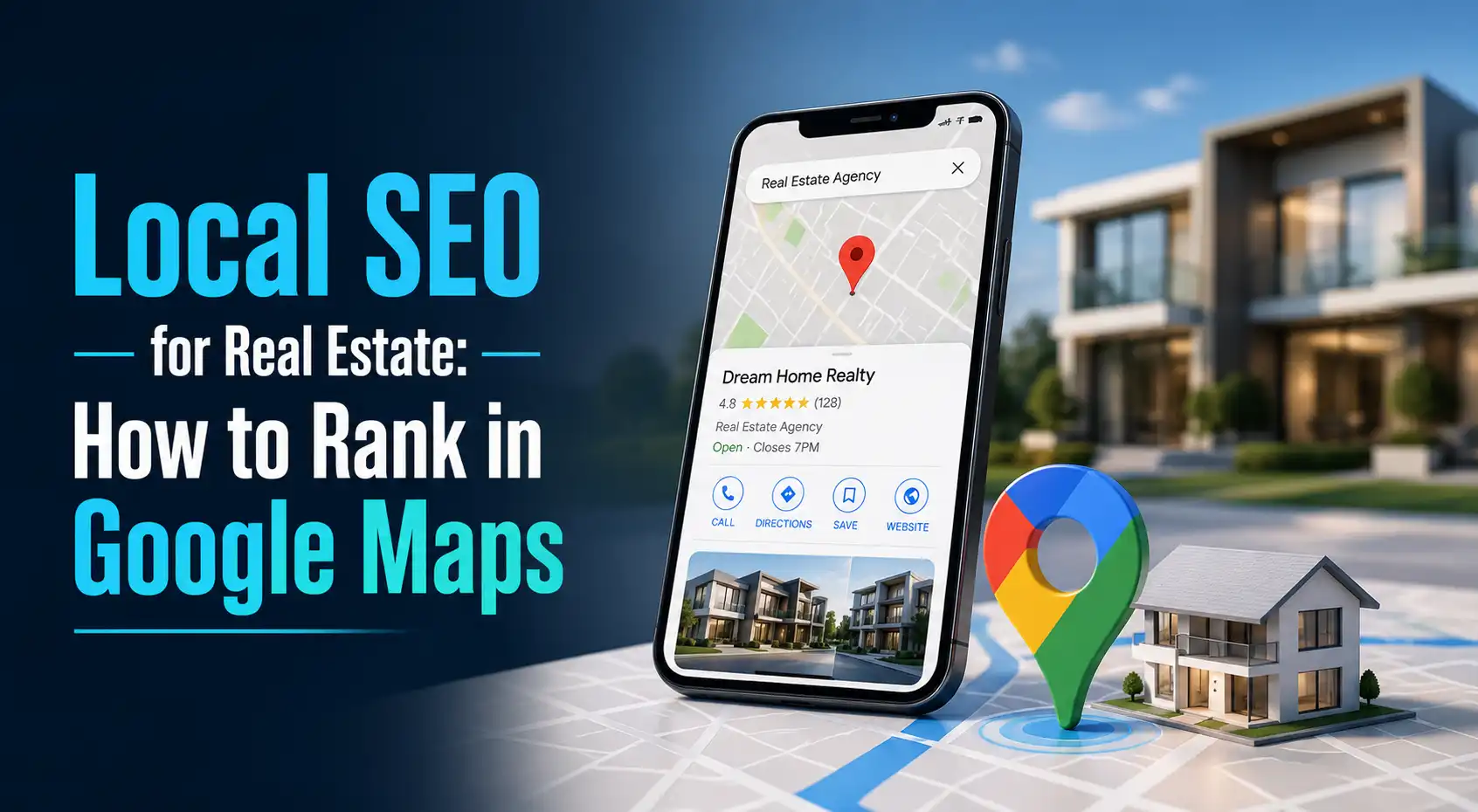
ToggleLocal SEO for real estate helps agencies, builders, and developers improve their visibility in Google Search and Google Maps for location-based property searches. By optimizing your Google Business Profile, creating location-specific content, implementing schema markup, and maintaining strong local authority, real estate businesses can generate more qualified leads and increase property inquiries.
What Is Local SEO for Real Estate?
Local SEO for Real Estate is the process of optimizing a real estate business to appear in Google’s local search results and Google Maps when users search for location-specific property-related services. Unlike traditional SEO, which targets broader search terms, local SEO focuses on attracting potential buyers and investors searching within a particular city, locality, or neighborhood.
For example, instead of targeting “luxury apartments,” a real estate business may optimize for searches like “3 BHK flats in Vadodara,” “property developers in Bhayli,” or “real estate company near me.” Since most property buyers begin their research online, SEO for real estate in India has become essential for increasing local visibility, generating qualified leads, and building trust within target markets. An effective Local SEO in real estate strategy combines Google Business Profile optimization, location-based content, customer reviews, local citations, technical SEO, and structured data to improve search rankings and attract buyers who are ready to take action.
Why Google Maps Matters for Real Estate Businesses
Google Maps has become one of the first places buyers search when looking for real estate companies, residential projects, builders, or nearby properties. Appearing in Google Maps increases visibility, credibility, and customer trust while driving highly qualified inquiries.
Google determines local rankings using three primary factors.
Relevance
Relevance refers to how closely your business profile matches a user’s search query. Google evaluates your business description, categories, services, keywords, website content, and overall business information to determine whether your company is the best match for a particular search.
Real estate businesses should ensure that their Google Business Profile accurately describes their services and includes relevant property-related keywords naturally throughout the profile.Distance
Distance measures how close your business is to the location specified by the user or their current location. While businesses cannot change their physical location, they can improve local relevance by optimizing location pages, publishing localized content, and maintaining accurate business information across all online platforms.
Prominence
Prominence measures how well-known and trustworthy a business is both online and offline. Google evaluates customer reviews, website authority, backlinks, citations, media mentions, business reputation, and overall online presence when determining prominence.
Businesses with strong local authority, positive customer reviews, and consistent online information generally perform better in Google Maps rankings.
Step-by-Step Google Business Profile Optimization
Your Google Business Profile is the foundation of every successful local SEO for real estate strategy. A fully optimized profile helps Google understand your business while increasing visibility in Google Maps and local search results. Begin by claiming and verifying your Google Business Profile. Ensure that every business detail is accurate and consistent with your website and other online listings. Complete every available section instead of leaving fields blank, as complete profiles generally perform better in local search.
Regularly update your profile with new project information, photographs, business hours, services, promotional posts, and customer reviews. Active profiles signal to Google that the business is legitimate and regularly maintained, increasing the likelihood of ranking in local search results.
Optimize Your Google Business Profile
A well-optimized Google Business Profile improves visibility, customer trust, and lead generation. Every element of the profile contributes to local ranking performance
Optimize Business Information
Business information should always be complete, accurate, and consistent. Include the correct business name, address, phone number, website URL, operating hours, business description, email address, and service areas.
Avoid keyword stuffing within the business name, as it violates Google’s guidelines. Instead, focus on providing clear and factual business information that accurately represents your company.Choose Categories
Selecting the correct business categories helps Google understand your services. Choose the primary category that best represents your business, such as Real Estate Developer, Real Estate Agency, Property Consultant, or Commercial Real Estate Agency. Add relevant secondary categories whenever applicable to improve search relevance without selecting unrelated categories.
Add Services
Clearly list all services offered by your business. This may include residential apartments, luxury homes, villas, commercial properties, property investment consulting, property management, rental services, and redevelopment projects. Detailed service listings help Google connect your business with a wider variety of relevant search queries.
Upload High-Quality Photos
Visual content significantly influences customer engagement. Upload professional photographs of completed projects, construction progress, model apartments, amenities, offices, team members, site visits, floor plans, and neighborhood surroundings. Regularly updating images keeps the profile active while helping buyers develop confidence in your projects.
Publish Google Posts
Google Posts allow businesses to share project launches, construction updates, offers, events, blogs, property investment tips, and company announcements directly within the Business Profile. Publishing fresh content consistently signals business activity while providing users with valuable information before they visit your website.
Manage Review & Response
Customer reviews are one of Google’s strongest local ranking signals. Encourage satisfied buyers to leave genuine reviews describing their experiences.
Respond professionally to every review, including negative feedback. Thoughtful responses demonstrate customer care while improving your business reputation and strengthening local trust signals.
Build Location Pages & Content That Rank
Location-specific content plays a major role in SEO for real estate company websites. Instead of creating one general services page, businesses should develop dedicated pages targeting each city, locality, or project location they serve.
For example, if a developer operates across multiple locations, separate pages can be created for areas such as Bhayli, Gotri, Vasna, Atladara, Sevasi, Harni, and Sama-Savli Road. Each page should provide unique content about the location rather than repeating the same information with different place names.
High-quality location pages may include information about nearby schools, hospitals, shopping centers, transportation connectivity, infrastructure developments, investment opportunities, lifestyle advantages, property trends, and ongoing residential projects. Adding neighborhood guides, local market insights, frequently asked questions, buyer tips, and area-specific blogs further strengthens local relevance. Search engines recognize this content as genuinely useful for users searching within those locations, helping improve Google Maps visibility and organic rankings.
Location pages also support internal linking strategies by connecting project pages, blogs, service pages, and nearby property listings, creating stronger topical authority for SEO for real estate developers.
Local Keyword Research for Real Estate
Keyword research is the foundation of every successful Local SEO in Real Estate strategy. Instead of targeting broad keywords with high competition, businesses should focus on location-specific search terms that reflect how potential buyers search online.
For example, users are more likely to search for phrases such as “apartments in Vadodara,” “luxury flats near Bhayli,” “3 BHK homes in Gotri,” or “real estate developers in Manjalpur” rather than generic property-related terms. These location-based keywords often have stronger purchase intent and higher conversion potential.
Businesses should naturally incorporate local keywords into page titles, meta descriptions, URLs, headings, image alt text, Google Business Profile descriptions, blog content, and location pages. Long-tail keywords that include property type, location, and buyer intent generally perform better because they attract users actively searching for properties. A well-planned keyword strategy helps improve Google Maps rankings while supporting SEO for Real Estate in India across multiple local markets.
Implement Local Business Schema
Schema markup is structured data that helps search engines understand website content more accurately. For real estate businesses, implementing Local Business Schema improves the chances of appearing in rich search results while strengthening local search relevance.Important schema types include Local Business Schema, Organization Schema, Real Estate Listing Schema, FAQ Schema, Review Schema, and Breadcrumb Schema.
A local business schema should include essential business information such as company name, address, phone number, website, business hours, geographic coordinates, and service areas. This structured information helps Google connect your business with relevant local searches and improves visibility in Google Maps. Adding schema markup also supports Al-powered search experiences by making website information easier for search engines to interpret.
Local Citations & Business Directories
Local citations are online mentions of your business across trusted websites, directories, and listing platforms. These citations strengthen Google’s confidence in your business while improving local authority.
Your Name, Address, and Phone Number (NAP) should remain identical across every platform, including your website, Google Business Profile, social media pages, business directories, and property listing websites.
For real estate businesses, maintaining listings on reputable directories and local business platforms helps improve credibility and local search visibility. Inconsistent business information may confuse search engines and negatively affect local rankings. Regularly auditing citations ensures that outdated phone numbers, addresses, or website links are corrected promptly.
Focus on E-E-A-T
Google evaluates content using the principles of Experience, Expertise, Authoritativeness, and Trustworthiness (E-E-A-T). These quality signals are especially important for industries like real estate, where buyers make significant financial decisions.
Real estate businesses should publish accurate, well-researched content supported by genuine market expertise. Including author profiles, company information, project case studies, customer testimonials, certifications, awards, and years of industry experience helps establish authority. Real estate business should publish accurate
Content should also be updated regularly to reflect current property trends, pricing insights, government regulations, and market developments. Demonstrating real-world experience builds trust with both search engines and potential buyers, improving long-term SEO for real estate developers’ performance.
Why is Local SEO Important for Real Estate Businesses?
Most property buyers begin their search online before contacting a developer or visiting a project site. As a result, businesses that appear prominently in local search results receive significantly more visibility and inquiries than competitors with weak online presence.
Local SEO for real estate helps businesses attract highly targeted audiences who are actively searching for properties within specific locations. Unlike traditional advertising, Local SEO reaches potential customers at the exact moment they are looking for homes, apartments, commercial properties, or investment opportunities.
An effective Local SEO strategy also improves Google Maps visibility, increases website traffic, generates qualified property leads, builds brand credibility, and enhances customer trust through reviews and consistent online information. For builders, agencies, and developers, investing in SEO for Real Estate in India provides sustainable long-term growth while reducing dependence on paid advertising.
Essential Tools to Measure Local SEO Performance
Monitoring Local SEO performance helps businesses understand what is working and where improvements are needed. Several tools provide valuable insights into rankings, customer behavior, and local visibility.
Google Analytics 4 (GA4)
Google Analytics 4 tracks website traffic, user engagement, conversions, and visitor behavior. Businesses can identify which location pages generate the most traffic and understand how users interact with their website.
Google Business Profile Insights
Google Business Profile Insights provides valuable information about customer searches, profile views, calls, website clicks, direction requests, and photo performance. These insights help businesses evaluate their Google Maps visibility and optimize their local presence.
Semrush Local
Semrush Local allows businesses to monitor local keyword rankings, citation consistency, online reviews, and local search performance across multiple locations. It also identifies optimization opportunities that improve Google Maps rankings.
Ahrefs
Ahrefs helps monitor backlinks, organic keyword rankings, competitor performance, and website authority. Businesses can use Ahrefs to identify valuable local keyword opportunities and strengthen their overall SEO strategy.
Common Local SEO Mistakes Real Estate Businesses Make
Many businesses fail to achieve strong local rankings because they overlook important optimization practices. Avoiding these common mistakes can significantly improve Google Maps visibility and local search performance.
Duplicate Google Business Profiles
Creating multiple Google Business Profiles for the same business can confuse both users and search engines. Duplicate listings often divide reviews, reduce ranking potential, and create inconsistent business information.
Not Optimize Google My Business Profiles
Many businesses claim their Google Business Profile but leave important sections incomplete. Missing business descriptions, outdated contact information, poor-quality images, and inactive profiles reduce local search performance.
Ignoring Reviews
Customer reviews are one of the strongest local ranking factors. Businesses that fail to encourage reviews or respond to customer feedback miss valuable opportunities to build trust and improve Google Maps rankings.
No Schema Markup
Without structured data, search engines have less information about your business. Missing schema markup reduces the likelihood of appearing in rich search results and limits overall local SEO performance.
Keyword Stuffing
Repeating location-based keywords unnaturally throughout webpages can negatively affect user experience and search rankings. Keywords should always be integrated naturally within valuable, informative content.
Not Using Location Pages
Many real estate businesses rely on a single services page instead of creating dedicated location-specific pages. Without localized content, search engines struggle to understand which areas the business serves, reducing visibility for location-based searches.
Conclusion
As competition in the real estate industry continues to grow, appearing in Google Maps has become just as important as ranking in traditional search results. An effective local SEO for real estate strategy combines Google Business Profile optimization, location-specific content, local keyword research, schema markup, customer reviews, citations, and E-E-A-T principles to improve visibility and attract qualified property buyers.
Whether you’re a builder, agency, or developer, investing in SEO for real estate company websites helps generate high-quality leads, increase brand credibility, and strengthen your presence in local search. By consistently optimizing your online presence and monitoring performance, you can achieve sustainable growth and remain competitive in today’s digital property market.