
Table of Contents
ToggleCategory
- Blog
- Branding
- Digital Marketing
- Graphic Design
- Nictiontech
- Real Estate
- Social Media Marketing
- Video Marketing
- Video Production
- Website Design
Recent Posts
- 5 Hidden Metrics That Prove Your Ads Are Suffering from Creative Fatigue
- How Al Is Changing Digital Marketing Services in India
- Performance Marketing for Real Estate Property: Leads, Ads & ROI
- How to Get Your Brand Mentioned in ChatGPT and AI Search Results
- How Real Estate Brands Can Use Reels & Shorts to Sell Properties
Introduction
Social media has become one of the most powerful marketing channels for businesses of every size. Platforms like Facebook, Instagram, LinkedIn, YouTube, and X allow brands to connect directly with audiences where they spend the most time. While organic reach still matters, many businesses now depend on paid campaigns to increase visibility, generate leads, and drive sales faster.
This is why paid social advertising has become an essential part of modern marketing strategies. It gives businesses the ability to target specific users, control budgets, and measure campaign results in real time. However, like every marketing method, it comes with both strengths and limitations.
Some brands achieve excellent returns through paid campaigns, while others struggle due to poor planning, weak creatives, or rising competition. Understanding both the advantages and challenges of social media advertising is important before investing money into campaigns.
In this blog, we will explore how paid social campaigns work, the pros and cons of this strategy, and why businesses often work with a Paid Social Media Agency in India to improve results and reduce wasted spend.
What is Social Media Paid Advertising?
Social media paid advertising is a marketing method where businesses pay platforms such as Facebook, Instagram, LinkedIn, YouTube, or other networks to display promotional content to selected audiences. Unlike organic posts, paid campaigns are designed to increase reach quickly and target users based on age, location, interests, behavior, profession, and online activity.
This approach is different from standard posting because brands can control who sees the message and how much they spend. It is one of the fastest ways to generate traffic, leads, app installs, inquiries, and purchases.
As part of broader social media marketing, paid campaigns are commonly used to support launches, seasonal offers, brand awareness, remarketing, and direct conversions. Businesses that need faster growth often prioritize social media paid advertising because it delivers measurable performance in a shorter time frame.
How Does Social Media Paid Advertising Work?
Social media paid advertising works through an auction-based system. Businesses create campaigns inside advertising platforms, choose their objective, define the target audience, set a budget, and launch ads.
For example, a business may choose lead generation as a campaign objective. The platform then shows ads to users who are most likely to fill forms, click buttons, or take action based on platform data.
Advertisers can choose formats such as image ads, video ads, carousel ads, story ads, reels ads, or lead forms. Budgets can be daily or lifetime-based. Payment often happens through CPC (cost per click), CPM (cost per thousand impressions), CPA (cost per acquisition), or similar models.
Once campaigns are live, performance data such as reach, clicks, leads, conversions, and return on ad spend can be tracked. This allows businesses to optimize campaigns continuously for better outcomes.
What are the 4 Pillars of Social Media Marketing?
Successful paid campaigns work best when built on a strong social media foundation. These four pillars support long-term growth.
Strategy
Every campaign should begin with a clear strategy. Businesses need to know their goals, audience, brand positioning, and expected outcomes. Without strategy, ad spend often gets wasted on the wrong audience or weak messaging.
Planning & Publishing
Consistent content planning helps maintain presence across platforms. Paid ads perform better when supported by regular organic activity because users often visit profiles before trusting a brand.
Engagement & Listening
Social media is not one-way communication. Brands must respond to comments, messages, and audience feedback. Listening to customer conversations helps improve future campaigns and messaging.
Analytics & Reporting
Performance should always be measured. Metrics such as reach, engagement, CTR, conversions, CPL, and ROI help marketers understand what works and what needs improvement.
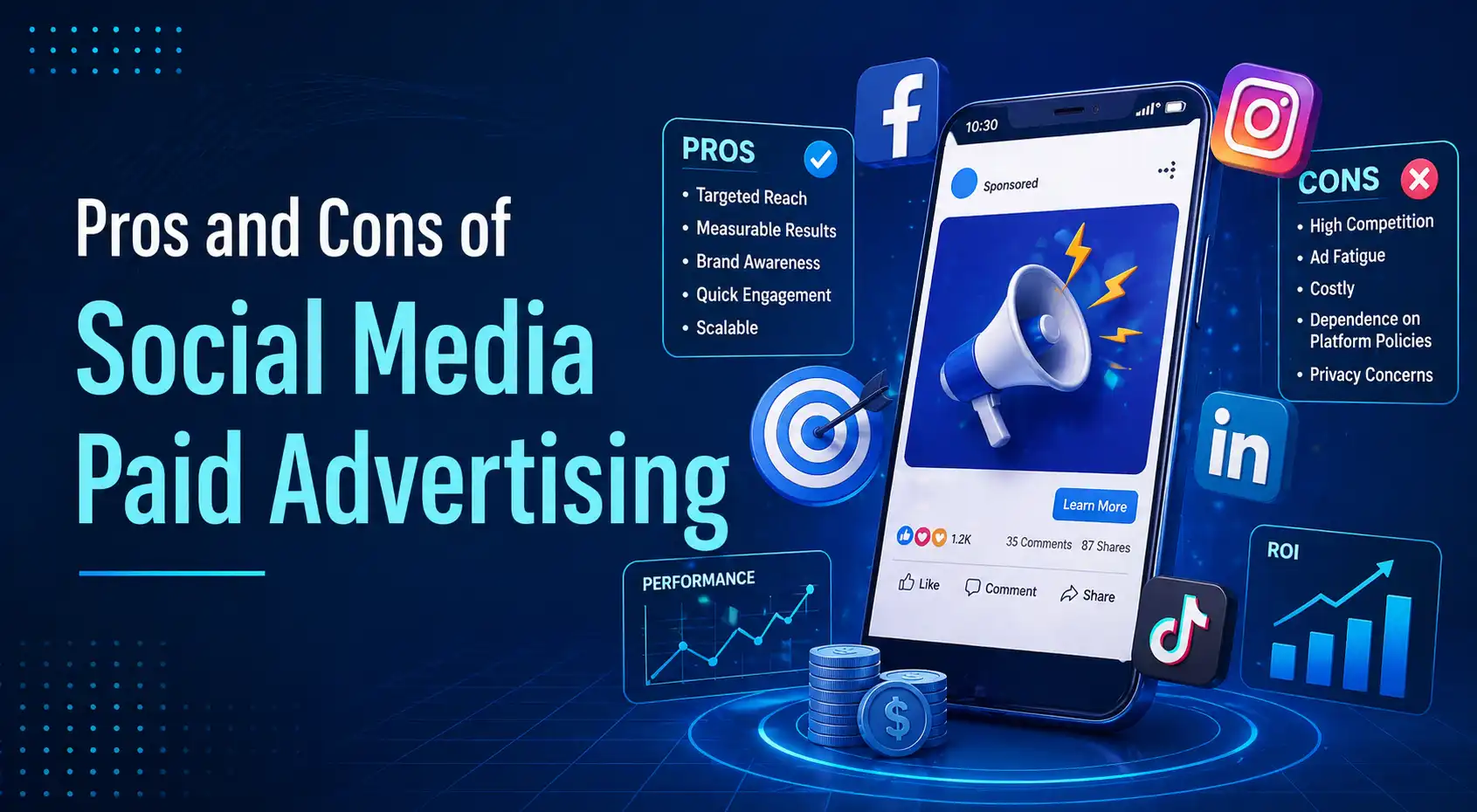
Pros of Social Media Paid Advertising
Advanced Audience Targeting
One of the strongest benefits of paid campaigns is targeting precision. Businesses can target users by demographics, interests, purchase behavior, job titles, location, language, and previous engagement. This makes campaigns more relevant and efficient.
Cost-Effective Marketing Solution
Compared to many traditional advertising channels, social ads can be budget-friendly. Businesses can start with smaller budgets and scale successful campaigns. CPC and CPM models also give flexibility depending on goals.
High Engagement & Interaction
Social platforms are built for interaction. Users can like, comment, share, save, message, and click instantly. This creates stronger engagement than many other advertising formats.
Measurable Performance & ROI
Unlike offline campaigns, digital campaigns provide detailed performance data. Businesses can track exactly how much was spent and what results were generated. This makes optimization easier and improves return on investment (ROI).
Increased Brand Awareness & Reach
Even new brands can reach thousands or millions of users quickly through paid campaigns. This helps businesses grow visibility in crowded markets.
Faster Lead Generation & Sales
Lead forms, website traffic ads, remarketing, and shopping campaigns can generate inquiries and purchases faster than many organic methods. This is why many brands combine paid ads with a Performance marketing agency in India for faster growth.
Cons of Social Media Paid Advertising
Ad Fatigue & Banner Blindness
When users repeatedly see the same creatives, performance drops. Audiences may ignore ads after frequent exposure. This means creatives must be refreshed regularly.
Increasing Competition & Rising Costs
More businesses are advertising every year. Higher competition often increases CPC and CPM costs, especially in competitive industries like real estate, fashion, finance, and education.
Dependence on Platform Algorithms
Ad performance depends heavily on platform systems. Changes in algorithms, ad policies, or delivery systems can affect results suddenly.
Privacy & Data Tracking Limitations
Privacy changes such as iOS tracking restrictions and stricter regulations have reduced data accuracy in some campaigns. This can make targeting and attribution more difficult.
Time-Consuming Campaign Management
Strong results require constant monitoring, testing, reporting, budget adjustments, and creative updates. Poor management often leads to wasted budgets.
Risk of Negative Feedback & Brand Reputation
Users can publicly comment on ads. Negative comments, complaints, or trolling can affect brand perception if not handled professionally.
Paid vs Organic Social Media
Paid and organic social media serve different purposes, and the best strategy often combines both.
Organic social media focuses on long-term community building, trust, and regular engagement. It is useful for brand personality, education, updates, and relationship building.
Paid social media focuses on scale, speed, and conversions. It helps brands reach users beyond existing followers and generate measurable business outcomes quickly.
Organic builds trust slowly. Paid accelerates reach and action. Together, they create a stronger full-funnel marketing strategy.
Why Choose a Social Media Paid Advertising Agency in India
Many businesses run ads themselves but fail to get strong results because campaign success depends on targeting, creatives, data analysis, and optimization.
A professional Paid Social Media Agency in India helps businesses build strategies aligned with goals such as leads, sales, app installs, or awareness. Agencies usually have specialists in media buying, copywriting, creative testing, analytics, and remarketing.
They also understand local markets, regional audiences, festival trends, and cost benchmarks. This is especially useful for Indian businesses wanting faster growth.
A skilled paid social advertising agency in India can reduce wasted spend, improve conversion rates, and scale campaigns efficiently. Many brands also combine paid social with a Performance marketing agency in India for stronger multi-channel growth.
Future Trends in Social Media Paid Advertising (2026)
AI-driven campaign optimization will play a bigger role in audience targeting, bidding, and creative testing. Platforms will automatically identify high-performing combinations faster than manual management.
Short-form video ads will continue dominating performance, especially on reels, shorts, and story formats. Attention spans are shorter, so quick and compelling creatives will matter more.
First-party data strategies will become more important as privacy rules tighten. Businesses that build their own email lists, CRM audiences, and customer data will perform better.
Conversational ads using WhatsApp, Messenger, and direct chat journeys will increase lead conversions. Social commerce will also grow, allowing users to buy directly inside platforms.
Brands that adapt early to these trends will have an advantage in 2026 and beyond.
Conclusion
Social media paid advertising remains one of the most effective digital growth tools for modern businesses. It offers speed, targeting precision, measurable outcomes, and scalable lead generation. For brands looking to grow quickly, paid social advertising can deliver strong value.
However, success is not automatic. Rising competition, ad fatigue, privacy changes, and poor campaign management can reduce results. That is why strategy, testing, and consistent optimization are essential.
Businesses that combine strong branding, creative content, analytics, and professional execution often see the best outcomes. Working with a trusted Paid Social Media Agency in India can further improve efficiency and profitability.
In 2026, paid social media will continue evolving—but for brands that use it wisely, it will remain a major engine of growth.
FAQs
Paid social advertising is when businesses pay social platforms to show promotional ads to selected audiences for awareness, leads, traffic, or sales.
It offers targeted reach, measurable ROI, fast visibility, scalable budgets, and strong lead generation opportunities.
Challenges include rising costs, ad fatigue, algorithm dependence, privacy limits, and the need for constant optimization.
Yes, when managed properly it remains one of the strongest channels for brand growth and conversions.
Costs vary by platform, audience, industry, and competition. Campaigns can start small and scale over time.
If you want better targeting, stronger creatives, lower waste, and improved ROI, hiring experts is often beneficial.
It depends on the audience and goal. Instagram and Facebook are strong for B2C, LinkedIn for B2B, and YouTube for video reach.