

Table of Contents
ToggleCategory
- Blog
- Branding
- Digital Marketing
- Graphic Design
- Nictiontech
- Real Estate
- Social Media Marketing
- Video Marketing
- Video Production
- Website Design
Recent Posts
- 5 Hidden Metrics That Prove Your Ads Are Suffering from Creative Fatigue
- How Al Is Changing Digital Marketing Services in India
- Performance Marketing for Real Estate Property: Leads, Ads & ROI
- How to Get Your Brand Mentioned in ChatGPT and AI Search Results
- How Real Estate Brands Can Use Reels & Shorts to Sell Properties
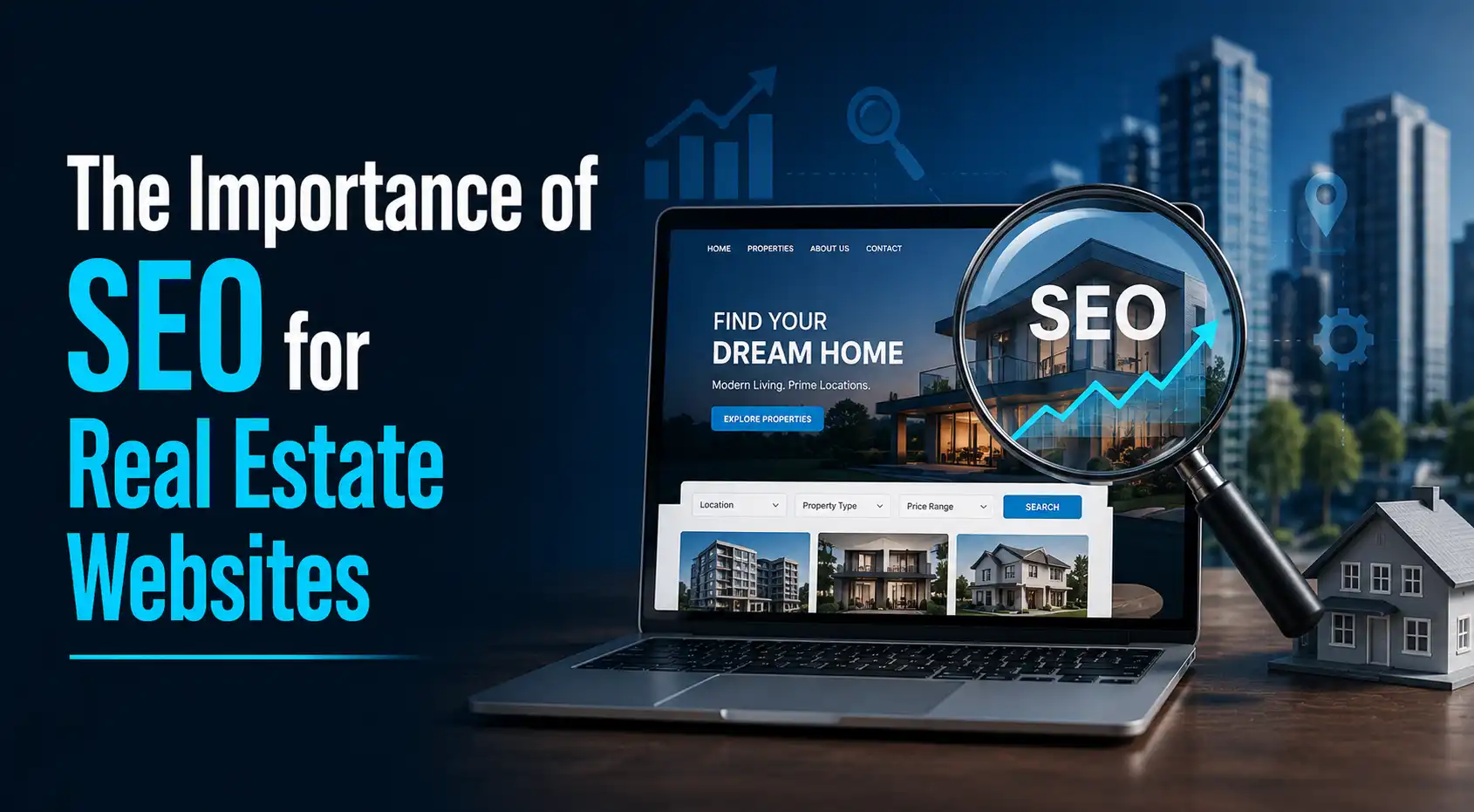
Real Estate SEO helps property developers, agents, and real estate businesses improve organic visibility, attract qualified property buyers, reduce dependence on paid advertising, and build long-term brand authority through optimized content, local SEO, technical improvements, and AI search optimization.
Introduction
The real estate industry is highly competitive, and buyers increasingly begin their property search online. A strong SEO for real estate websites strategy helps businesses appear when potential buyers search for properties, locations, projects, and investment opportunities. From keyword research and local optimization to technical SEO and AI search visibility, SEO can create a sustainable source of qualified property leads.
What Is Real Estate SEO?
Real Estate SEO is the process of optimizing a real estate website so that its property pages, project information, location content, and other resources appear more prominently in search engine results.
Unlike general SEO, SEO for real estate businesses requires a strong focus on location, property type, buyer intent, project-specific searches, and local competition. A buyer searching for a “3 BHK apartment in Vadodara” has a very different intent from someone searching for general information about buying property.
A successful real estate SEO strategy combines keyword research, technical optimization, high-quality content, local SEO, backlinks, property page optimization, and emerging AI search practices. The objective is not simply to increase website traffic but to attract users who are actively researching or considering a property purchase.
Why Is SEO Important for Real Estate Websites?
Increase Organic Visibility
Real estate buyers often search online before contacting a developer or agent. Appearing prominently for relevant searches can help businesses increase their visibility among potential buyers.
Optimized project pages, location pages, blogs, and property listings can target different search queries throughout the buyer journey. This allows a real estate website to reach users looking for specific configurations, locations, amenities, price ranges, and investment opportunities.Generate Qualified Property Leads
SEO can attract users who are already searching for specific properties or real estate services. Someone searching for a particular location and property configuration generally has stronger purchase intent than a user who simply encounters a generic advertisement.
By targeting relevant keywords and creating useful landing pages, businesses can attract more qualified visitors and guide them toward enquiries, site visits, calls, or other conversion actions.Reduce Dependence on Paid Advertising
Paid advertising can provide immediate visibility, but traffic generally stops when campaigns are paused. SEO takes time to build but can continue generating organic visibility after pages establish rankings.
A strong organic presence can therefore complement paid campaigns and provide a more sustainable source of website traffic and leads over the long term.Build Long-Term Brand Authority
Consistently publishing useful real estate content helps establish a business as a reliable source of information. Location guides, property insights, investment content, project information, and expert advice can demonstrate knowledge and expertise.
Over time, this can strengthen brand credibility while increasing the likelihood that potential buyers recognize and trust the business.
SEO Strategies for Real Estate Websites
Real Estate Keyword Research
Keyword research is the foundation of an effective real estate SEO strategy. Businesses should identify searches related to property type, location, configuration, amenities, price, investment intent, and buyer requirements.
For example, searches may include terms related to apartments in a particular city, luxury homes in a specific neighborhood, or the price of a particular property configuration. Keywords should be mapped to the most relevant pages rather than forcing multiple unrelated keywords onto a single page.Create Location-Specific Landing Pages
Location-specific pages allow real estate businesses to target searches associated with individual cities, neighborhoods, and areas.
A well-developed location page can include information about connectivity, nearby facilities, lifestyle advantages, property options, infrastructure, and relevant projects. Each page should provide genuinely useful information rather than simply changing the location name on duplicate content.Optimize Individual Property & Project Pages
Every property or project page should be optimized around its specific search intent. Important information can include property configuration, carpet area, amenities, location, floor plans, specifications, pricing information where appropriate, developer details, and enquiry options.
Strong headings, descriptive URLs, relevant metadata, optimized images, internal links, and clear calls to action can improve both search visibility and user experience.Technical SEO Audit of Full Websites
A technical real estate SEO audit helps identify issues that can prevent search engines from effectively crawling, understanding, and indexing a website.
The audit should examine website architecture, crawlability, indexing, redirects, broken pages, canonical tags, XML sitemaps, robots.txt, page speed, mobile usability, duplicate content, structured data, and other technical elements.
Regular audits are particularly important for real estate websites with large numbers of property, project, location, and blog pages.On-Page SEO Techniques for Real Estate Listings
Real estate pages should have unique title tags, meta descriptions, headings, descriptive image alt text, optimized URLs, relevant internal links, and naturally placed keywords.
Content should also answer the questions buyers are likely to have. Instead of simply listing property specifications, pages should explain important features clearly and make the information easy to scan.Local SEO for Real Estate Businesses
Local SEO helps developers and agents appear when users search for real estate services and properties within specific locations.
Optimizing the Google Business Profile, maintaining accurate business information, collecting genuine reviews, creating relevant location content, and earning local citations can strengthen local search visibility.Local Backlinks for Your Real Estate Websites
Backlinks from relevant and credible local websites can support authority and visibility. Real estate businesses can build local links through industry associations, local publications, business directories, community organizations, partnerships, and relevant local resources.
The focus should be on obtaining relevant, trustworthy links rather than simply generating a large number of backlinks.Real Estate SEO for AI Search & Google AI Overviews
Search behavior is changing as AI-powered search experiences become more common. Real estate businesses should structure content so that search engines and AI systems can easily understand the information. Clear answers, structured content, FAQs, location-specific information, original insights, accurate property details, and strong E-E-A-T signals can improve the chances of being referenced or surfaced in AI-powered search experiences.
Keywords Monitoring
Keyword monitoring helps businesses understand how their pages perform for important searches over time. Tracking rankings can reveal opportunities, declining visibility, emerging competitors, and pages that require optimization. However, rankings should not be viewed in isolation. Organic traffic, impressions, clicks, inquiries, and conversions should also be evaluated to understand the actual business impact of SEO.
Analyse Competitors
Competitor analysis helps identify which keywords, content formats, locations, and pages are generating visibility within the real estate market. Businesses can study competitor landing pages, property content, backlink profiles, local visibility, and content strategies to identify gaps. These insights can then be used to develop a stronger and more differentiated SEO strategy.
The Impact of Mobile Optimization on Real Estate SEO
Property searches are increasingly performed through smartphones. A website that loads slowly or is difficult to navigate on mobile devices can create a poor user experience and reduce conversions.
Real estate websites should use responsive layouts, readable text, optimized images, fast-loading pages, simple navigation, and mobile-friendly inquiry forms. Mobile optimization is important for both user experience and search performance.
Content Marketing for Real Estate: Blogging and Beyond
Content marketing allows real estate businesses to target informational searches beyond individual property listings. Blogs can cover topics such as buying guides, locality information, property investment, home-buying tips, market trends, financing considerations, and comparisons between property types.
Beyond blogs, businesses can also use FAQs, guides, videos, infographics, project explainers, and other useful resources to address different stages of the property buyer journey.
Tools and Metrics
SEO performance should be measured using relevant tools and business metrics. Google Search Console and Google Analytics can provide insights into organic visibility, traffic, clicks, user behavior, and conversions.
SEO platforms can also help monitor rankings, backlinks, competitors, and technical issues. Important metrics include organic traffic, impressions, click-through rate, keyword visibility, qualified inquiries, conversion rate, and leads generated through organic search.
Future Trends in Real Estate SEO
AI Search & Generative Engine Optimization (GEO)
AI-powered search is changing how people discover information about properties and real estate services. Generative Engine Optimization (GEO) will become increasingly important as businesses optimize content for AI-driven search experiences.
Real estate brands will need to provide authoritative, structured, original, and easily understandable information that AI systems can interpret accurately.Voice Search Optimization
Voice search allows users to ask conversational questions rather than entering short keywords. Real estate businesses can prepare for this behavior by creating natural-language content that answers questions about property prices, locations, amenities, connectivity, and buying processes.
Hyperlocal SEO Will Become More Important
As search engines become better at understanding location, hyperlocal SEO will become increasingly valuable. Real estate businesses may need to create highly relevant content around specific neighborhoods, landmarks, roads, business districts, schools, and local amenities.
First-Hand & Original Real Estate Content
Generic content is becoming easier to produce. Original experiences and expert insights can therefore become more valuable.
Property walkthroughs, original market observations, local guides, expert commentary, project updates, and firsthand experiences can help real estate websites demonstrate genuine expertise and differentiate themselves from competitors.SEO Automation
Automation can make SEO management more efficient by supporting tasks such as keyword monitoring, reporting, technical checks, content analysis, and performance tracking.
However, automation should support strategic decision-making rather than completely replace human expertise. Real estate businesses still need knowledgeable professionals to interpret data, understand customer intent, and develop relevant content.
Conclusion
SEO has become an important long-term growth channel for real estate businesses competing for online visibility. A comprehensive SEO for real estate websites strategy can help businesses attract qualified property buyers, strengthen local visibility, reduce dependence on paid advertising, and establish long-term authority.
From keyword research and technical SEO audits to location pages, property optimization, local backlinks, content marketing, and AI search optimization, every component contributes to a stronger digital presence. As search continues to evolve, real estate businesses that consistently improve their websites and provide useful, trustworthy information will be better positioned to capture relevant search demand.