
Table of Contents
ToggleCategory
- Blog
- Branding
- Digital Marketing
- Graphic Design
- Nictiontech
- Real Estate
- Social Media Marketing
- Video Marketing
- Video Production
- Website Design
Recent Posts
- 5 Hidden Metrics That Prove Your Ads Are Suffering from Creative Fatigue
- How Al Is Changing Digital Marketing Services in India
- Performance Marketing for Real Estate Property: Leads, Ads & ROI
- How to Get Your Brand Mentioned in ChatGPT and AI Search Results
- How Real Estate Brands Can Use Reels & Shorts to Sell Properties
Introduction
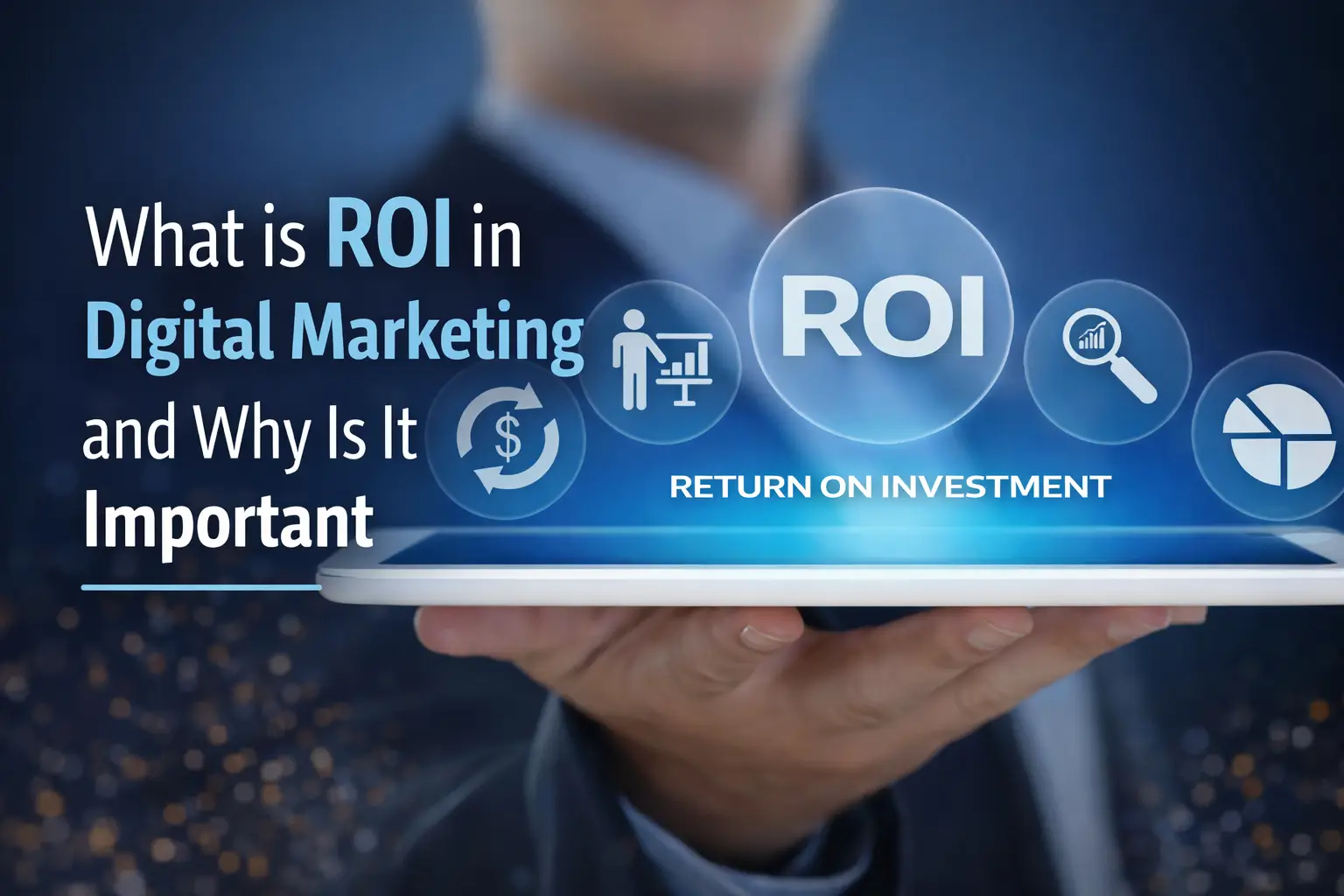
In the fast-evolving digital landscape, businesses are investing heavily in online marketing strategies to increase visibility, attract customers, and drive revenue. However, simply spending money on digital campaigns is not enough. Companies need to measure whether their marketing efforts are actually generating value. This is where ROI in digital marketing becomes an essential concept.
ROI, or Return on Investment, helps businesses evaluate the effectiveness of their marketing campaigns by comparing the revenue generated with the amount spent on marketing activities. Understanding ROI allows companies to identify which strategies are working, which need improvement, and how marketing budgets should be allocated for maximum results.
For businesses working with a digital marketing agency in Vadodara or across Gujarat, tracking ROI is crucial for ensuring transparency and achieving measurable growth. Agencies like Niction Tech emphasize data-driven marketing strategies that help businesses understand the true impact of their digital investments.
What is ROI in Digital Marketing?
ROI in digital marketing refers to the measurement of profit or value generated from marketing activities compared to the cost invested in those activities. It helps businesses determine whether their campaigns are profitable and how efficiently their marketing budget is being used.
The basic formula for calculating ROI is:
ROI = (Revenue from Marketing – Marketing Cost) / Marketing Cost × 100
This calculation provides a percentage that indicates how much return a business receives from its marketing investment. A positive ROI means that the campaign generated more revenue than it cost, while a negative ROI indicates that the campaign did not deliver the expected results.
Why ROI is Important in Digital Marketing
Measuring Campaign Effectiveness
One of the main reasons ROI is important is that it helps businesses measure the effectiveness of their marketing campaigns. By tracking ROI, companies can identify which strategies generate the most value and which ones require adjustments.
Better Budget Allocation
Understanding ROI allows businesses to allocate their marketing budget more effectively. Instead of investing equally across multiple channels, companies can focus on strategies that deliver the highest returns.
Data-Driven Decision Making
Digital marketing generates a large amount of data that can be analyzed to improve performance. ROI analysis helps marketers make informed decisions based on measurable results rather than assumptions.
Improved Marketing Strategies
By analyzing ROI, businesses can refine their marketing strategies and optimize campaigns for better performance. This continuous improvement process leads to more efficient marketing efforts.
Transparency and Accountability
For businesses working with a digital marketing agency, ROI provides transparency regarding campaign performance. It ensures that marketing investments are delivering tangible business outcomes.
Key Metrics Used to Measure Digital Marketing ROI
Website Traffic
Website traffic indicates how many users are visiting a website through different marketing channels such as search engines, social media, and paid advertisements.
Conversion Rate
The conversion rate measures the percentage of website visitors who complete a desired action, such as filling out a form, making a purchase, or subscribing to a newsletter.
Cost Per Lead (CPL)
Cost per lead represents the amount spent to generate a single potential customer. Lower CPL indicates a more efficient marketing campaign.
Customer Acquisition Cost (CAC)
CAC measures the total cost required to acquire a new customer through marketing and sales activities.
Customer Lifetime Value (CLV)
CLV estimates the total revenue a business can expect from a customer throughout their relationship with the brand.
How Digital Marketing Agencies Improve ROI
Strategic Campaign Planning
Professional agencies analyze market trends, competitors, and audience behavior to create targeted marketing strategies that maximize returns.
Optimized Advertising Campaigns
Digital marketing agencies manage paid advertising campaigns across platforms such as Google Ads and social media to generate high-quality leads.
Content Marketing and SEO
Content marketing and search engine optimization help businesses attract organic traffic and build long-term online visibility.
Performance Monitoring and Optimization
Agencies continuously monitor campaign performance and optimize strategies based on data insights to improve ROI.
Challenges in Measuring Digital Marketing ROI
Despite its importance, measuring ROI in digital marketing can be challenging due to several factors.
First, multiple marketing channels contribute to customer conversions, making it difficult to attribute results to a single campaign. Second, some marketing activities such as brand awareness campaigns may not generate immediate revenue but still provide long-term value.
Additionally, inaccurate data tracking or lack of proper analytics tools can affect ROI calculations. Businesses must use reliable analytics platforms and consistent measurement methods to obtain accurate insights.
Conclusion
ROI in digital marketing is a critical metric that helps businesses understand the effectiveness of their marketing investments. By measuring ROI, companies can identify successful strategies, optimize campaigns, and allocate budgets more efficiently.
Working with an experienced digital marketing agency can help businesses track performance metrics, analyze campaign data, and implement strategies that maximize returns.
As the digital marketing landscape continues to evolve, businesses that prioritize ROI-driven strategies will be better positioned to achieve sustainable growth and long-term success.
FAQs
ROI stands for Return on Investment and measures the profitability of marketing campaigns by comparing revenue generated with marketing costs.
ROI helps businesses understand whether their marketing strategies are profitable and guides better decision-making for future campaigns.
Businesses can improve ROI by optimizing campaigns, targeting the right audience, creating high-quality content, and analyzing performance data.
Tools such as Google Analytics, marketing automation platforms, and advertising dashboards help track campaign performance and ROI.
The timeframe varies depending on the strategy. Paid campaigns may show results quickly, while SEO and content marketing may take several months to generate significant returns.