
Table of Contents
ToggleCategory
- Blog
- Branding
- Digital Marketing
- Graphic Design
- Nictiontech
- Real Estate
- Social Media Marketing
- Video Marketing
- Video Production
- Website Design
Recent Posts
- 5 Hidden Metrics That Prove Your Ads Are Suffering from Creative Fatigue
- How Al Is Changing Digital Marketing Services in India
- Performance Marketing for Real Estate Property: Leads, Ads & ROI
- How to Get Your Brand Mentioned in ChatGPT and AI Search Results
- How Real Estate Brands Can Use Reels & Shorts to Sell Properties
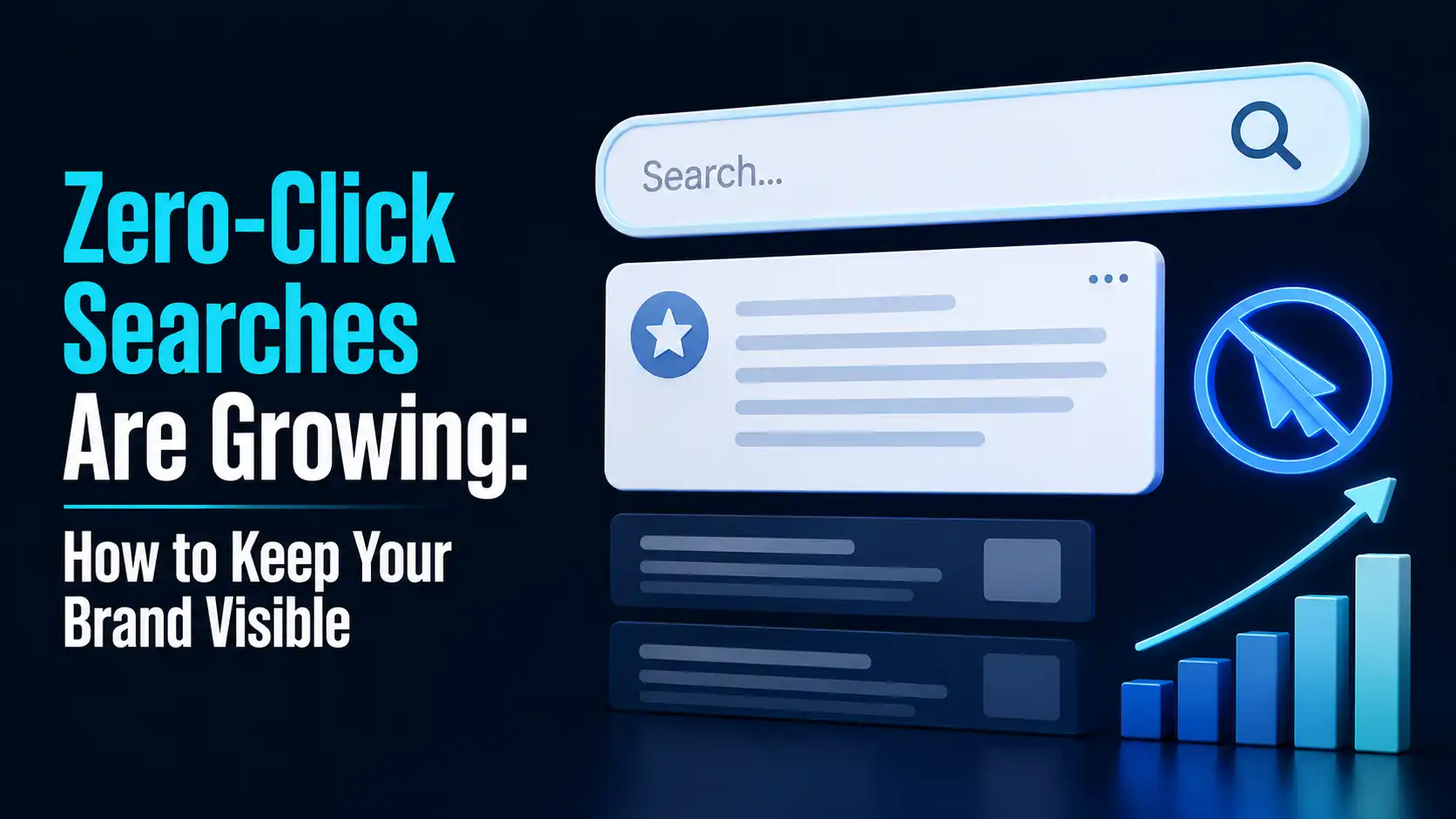
Zero-click searches are search results where users receive the information they need directly on Google without visiting a website. With the rise of Google Al Overviews, Featured Snippets, and other Al-powered search features, businesses must optimize for zero-click SEO, AEO, and GEO to improve brand visibility, earn Al citations, and remain discoverable even when users don’t click through to their websites.
What Are Zero-Click Searches?
A zero-click search occurs when Google provides the complete answer to a user’s query directly on the Search Engine Results Page (SERP), eliminating the need to click on a website. Instead of visiting multiple webpages, users receive instant information through Al-generated summaries, Featured Snippets, Knowledge Panels, Local Pack listings, calculators, weather widgets, and other search features.
The growth of zero click searches has changed how businesses approach SEO. Ranking first is no longer the only objective. Brands must now create content that search engines and Al systems can easily understand, summarize, and reference. This has led to the growing importance of Zero-click SEO, AEO (Answer Engine Optimization), and GEO (Generative Engine Optimization), which focus on increasing visibility within Al-generated search experiences rather than relying only on website clicks.
Types of Zero-Click Search Results
Google now provides multiple types of search features that deliver answers instantly. Understanding these formats helps businesses optimize their content more effectively.
Google Al Overviews
Google Al Overviews are Al-generated summaries that appear at the top of search results for many informational queries. Instead of displaying only traditional blue links, Google combines information from multiple trusted sources to provide a conversational answer.
For businesses, appearing within Al Overviews increases credibility and brand visibility even if users never visit the website. Optimizing content with clear explanations, structured formatting, entity-based information, and trustworthy sources improves the likelihood of being referenced.Featured Snippets
Featured Snippets provide concise answers extracted directly from webpages. They commonly appear in paragraph, list, table, or step-by-step formats above regular organic results.
Businesses can improve their chances of earning featured snippets by answering common questions clearly, using descriptive headings, organizing information logically, and writing concise introductory summaries before expanding on detailed explanations.Knowledge Panels
Knowledge Panels appear on the right side of desktop search results or prominently on mobile devices for recognized businesses, organizations, locations, and public figures. These panels display important business information such as company descriptions, contact details, operating hours, website links, reviews, and related entities.
Maintaining accurate business information across Google Business Profile and authoritative sources improves the likelihood of appearing within Knowledge Panels.Local Pack
The Local Pack displays nearby businesses for location-based searches such as “digital marketing agency near me” or “SEO company in Ahmedabad.” These listings include maps, ratings, addresses, phone numbers, operating hours, and directions.
Local businesses can improve local pack visibility by maintaining an optimized Google Business Profile, collecting customer reviews, ensuring NAP (Name, Address, Phone Number) consistency, and publishing locally relevant content.People Also Ask (PAA)
People Also Ask (PAA) boxes contain related questions that users commonly search for. Expanding each question reveals a concise answer extracted from relevant webpages.
Optimizing FAQ sections, writing question-based headings, and answering related queries naturally increase the chances of appearing within PAA results while improving overall zero-click SEO performance.
Why Are Zero-Click Searches Growing in 2026?
Search behavior has evolved significantly over the past few years, driven by advances in artificial intelligence, changing user expectations, and Google’s increasing focus on delivering faster answers. Rather than browsing multiple websites, users now expect immediate, accurate responses directly within search results.
One of the biggest reasons for the growth of zero-click searches is the widespread adoption of Google Al Overviews. Al-generated summaries combine information from multiple sources, allowing users to receive complete answers without leaving Google. This significantly reduces the number of searches that result in website visits.
Voice search has also contributed to this trend. Devices such as smartphones and smart assistants typically provide a single spoken answer rather than displaying multiple search results. Content optimized through AEO is more likely to be selected for these responses.
At the same time, Google continues expanding rich search features, including Featured Snippets, Knowledge Panels, Local Packs, and People Also Ask sections. These features improve user experience by presenting information instantly while reducing the need for additional clicks.
Another major factor is changing user behavior. Modern internet users value speed and convenience. Whether searching for definitions, business information, calculations, or quick comparisons, they increasingly prefer immediate answers instead of navigating through several websites.
As Al-powered search continues evolving, businesses must optimize not only for traditional SEO rankings but also for Al-generated visibility, making zero-click SEO, AEO, and GEO essential components of modern digital marketing.
How Zero-Click Searches Impact Businesses
The rise of zero-click search results has transformed the way businesses measure online success. While traditional SEO focused primarily on driving website traffic, modern search optimization must also prioritize visibility within Al-generated results and search features.
One noticeable impact is the reduction in organic click-through rates for informational searches. Even websites ranking in the top positions may receive fewer clicks because users find answers directly on Google’s search results page. This makes content quality and structured formatting more important than ever.
However, zero-click searches also create new branding opportunities. Businesses featured in Al Overviews, Featured Snippets, Knowledge Panels, or Local Packs gain significant exposure, even without direct website visits. Repeated appearances strengthen brand recognition and establish authority within the industry.
Zero-click visibility also influences customer trust. When Google repeatedly references a brand in Al-generated summaries or answer boxes, users are more likely to perceive that business as a credible source of information. This increased authority often leads to higher branded searches, stronger customer confidence, and improved conversion rates later in the buying journey. For local businesses, zero-click search features such as the Local Pack allow customers to call, request directions, or read reviews directly from search results without visiting the company’s website. Although website traffic may decrease, business inquiries and conversions can still increase.
Instead of measuring SEO success solely through website visits, businesses should now evaluate broader indicators such as Al citations, brand mentions, search visibility, local engagement, and overall brand visibility across Google’s evolving search ecosystem.
How to Keep Your Brand Visible in a Zero-Click Search World
As zero-click searches become more common, businesses must rethink their SEO strategies. Instead of focusing only on driving clicks, the goal should be to become the source that Google and Al-powered search engines trust and display. By optimizing content for both users and Al systems, businesses can maintain strong brand visibility even when users do not visit their websites.
Add Summary Sections
Every important webpage should begin with a concise summary that answers the primary search query in 50-70 words. Al systems and Google Al Overviews prefer content that immediately provides a clear answer before moving into detailed explanations. Summary sections also improve user experience by allowing readers to quickly understand the topic.
For example, instead of starting a blog with a lengthy introduction, provide a direct definition or explanation first, followed by supporting details. This increases the likelihood of being selected for Al-generated answers and featured snippets.Use Structured Data
Structured data helps search engines understand webpage content more accurately. Schema markup provides additional context about articles, FAQs, products, organizations, local businesses, reviews, and events.
Implementing structured data improves eligibility for rich search results and supports zero-click SEO by making content easier for Google and Al systems to interpret. Common schema types include Article Schema, FAQ Schema, Organization Schema, Local Business Schema, and Breadcrumb Schema.Optimize FAQs
Frequently Asked Questions have become one of the most valuable content formats for modern SEO. Al-powered search engines frequently extract concise answers from FAQ sections when generating responses.
Businesses should identify common customer questions and answer them clearly using simple language. Every answer should directly address the user’s query while remaining factually accurate and easy to understand. Well-optimized FAQs increase opportunities to appear in People Also Ask results and Al-generated summaries.Content Formats
The way content is presented is just as important as the information itself. Search engines and Al models process structured content more efficiently than large blocks of text.
Using numbered lists, comparison tables, FAQs, bullet points, definitions, and step-by-step guides improves readability while increasing the chances of being featured in Google Al Overviews and Featured Snippets. Organized formatting also enhances user engagement because visitors can quickly locate the information they need.Maintain Consistent Business Information
Consistency across all digital platforms strengthens Google’s confidence in a business. Company name, address, phone number, website URL, operating hours, and business descriptions should remain identical across the website, Google Business Profile, directories, and social media platforms.
Consistent information improves local SEO performance while increasing the likelihood of appearing in Knowledge Panels and Local Pack results. It also builds trust among users who expect accurate business information regardless of where they search.Demonstrate Experience & Expertise (E-E-A-T)
Google continues to prioritize Experience, Expertise, Authoritativeness, and Trustworthiness (E-E-A-T) when evaluating content quality. Businesses should publish accurate, well-researched content supported by practical experience and credible sources.
Including author information, case studies, industry insights, customer success stories, original research, and updated statistics strengthens content authority. Websites that consistently demonstrate expertise are more likely to earn Al citations and maintain long-term Brand Visibility within zero-click search environments
How to Measure Success Beyond Clicks
As search behavior changes, businesses need to evaluate performance using broader metrics than website traffic alone. Visibility within Al-generated search experiences has become an important indicator of digital success.
Tools to Track Al Overview Performance
Several SEO tools help businesses monitor their search performance across traditional and Al-powered search results.
Google Search Console provides insights into impressions, search queries, click-through rates, and keyword performance. Even if clicks decrease due to zero-click searches, increasing impressions may indicate stronger brand visibility.
Semrush helps monitor keyword rankings, featured snippet ownership, SERP features, and competitor performance. It also identifies new opportunities for content optimization.
Ahrefs allows businesses to track organic visibility, backlinks, keyword movements, and content performance while monitoring how competitors appear in search results.
Ubersuggest offers keyword analysis, content recommendations, SEO audits, and competitor insights that help businesses strengthen their zero-click SEO strategy.
Together, these tools provide valuable insights into overall search performance rather than relying solely on website traffic.
Brand Mentions
As Al-generated search becomes more common, brand mentions are becoming an important performance indicator. Even when users do not click through to a website, repeated references to a business increase familiarity and trust. Monitoring branded searches, online mentions, and citations across search platforms helps businesses evaluate whether their authority is growing over time.
Al Overview Citations
One of the newest SEO success metrics is Al citation frequency. Businesses should monitor whether their content is being referenced within Google Al Overviews and other Al-powered search experiences.
Being cited by Al systems indicates that content is considered reliable, authoritative, and useful. Regular Al citations significantly improve long-term brand credibility and visibility.
Featured Snippet Ownership
Featured Snippets continue to provide valuable exposure despite generating fewer direct clicks. Tracking how many keywords earn Featured Snippets helps businesses understand whether their content is being recognized as the best answer available.
Maintaining featured snippet ownership also increases opportunities for appearing in voice search responses and Al-generated summaries.
Common Mistakes That Reduce Zero-Click Visibility
Many businesses unknowingly reduce their chances of appearing in Al-generated search experiences by overlooking important optimization practices.
Ignoring Search Intent
Some businesses focus entirely on keywords while forgetting the actual questions users want answered. Search engines prioritize content that satisfies user intent rather than simply repeating keywords. Understanding informational, navigational, commercial, and transactional intent helps create more useful content.
Weak E-E-A-T Signals
Publishing generic articles without demonstrating real expertise often limits visibility. Websites lacking author credibility, industry experience, trustworthy references, or original insights are less likely to appear in Al-generated responses.
Building strong E-E-A-T signals through expert-written content, case studies, testimonials, and authoritative references increases trust among both users and search engines.Poor Content Structure
Large paragraphs without headings, summaries, tables, or logical organization make content difficult for both users and Al systems to understand. Using descriptive headings, concise paragraphs, comparison tables, numbered steps, and FAQ sections improves readability while increasing eligibility for Al-generated answers.
Missing Structured Data
Many websites still fail to implement schema markup, making it harder for search engines to understand page content. Without structured data, businesses may lose opportunities to appear in Featured Snippets, Knowledge Panels, and Al Overviews.
Regular technical audits help identify missing schema and improve search visibility.Outdated Content
Al systems prioritize fresh, accurate, and relevant information. Content containing outdated statistics, obsolete recommendations, or expired references gradually loses authority. Regularly updating existing pages with current information, recent examples, and revised insights helps maintain rankings and improves eligibility for zero-click search features.
Conclusion
The growth of zero-click searches is changing the future of SEO. Instead of measuring success only through website traffic, businesses must focus on becoming trusted sources that search engines and Al platforms choose to display. Features such as Google Al Overviews, Featured Snippets, Knowledge Panels, and Local Pack results have made visibility more valuable than clicks alone.
To remain competitive, businesses should invest in zero-click SEO, AEO, and GEO strategies that emphasize structured content, direct answers, schema markup, E-E-A-T principles, and consistent business information. By optimizing content for both traditional search engines and Al-powered search experiences, brands can strengthen their online presence, improve authority, and maintain long-term brand visibility in an evolving search landscape.