
Table of Contents
ToggleCategory
- Blog
- Branding
- Digital Marketing
- Graphic Design
- Nictiontech
- Real Estate
- Social Media Marketing
- Video Marketing
- Video Production
- Website Design
Recent Posts
- 5 Hidden Metrics That Prove Your Ads Are Suffering from Creative Fatigue
- How Al Is Changing Digital Marketing Services in India
- Performance Marketing for Real Estate Property: Leads, Ads & ROI
- How to Get Your Brand Mentioned in ChatGPT and AI Search Results
- How Real Estate Brands Can Use Reels & Shorts to Sell Properties
Introduction
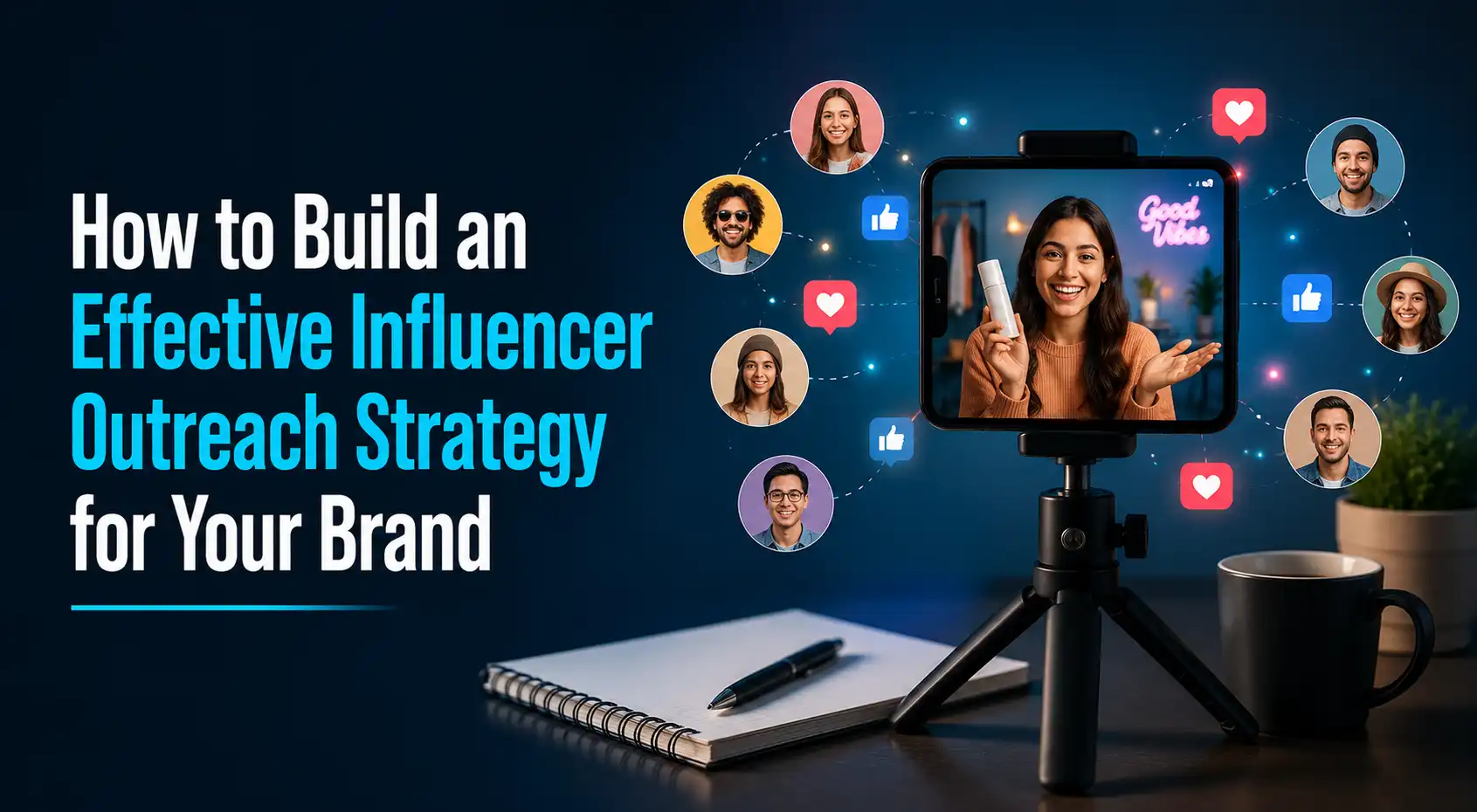
Influencer marketing has become one of the most effective ways for brands to reach targeted audiences and build trust. However, successful campaigns don’t happen by simply sending random collaboration requests. A well-planned influencer outreach strategy helps brands connect with the right creators, build meaningful partnerships, and achieve measurable marketing results.
What Is an Influencer Outreach Strategy and Why Does It Matter for Brands?
An influencer outreach strategy is a structured plan that helps businesses identify, approach, and collaborate with influencers who align with their brand values, target audience, and marketing objectives. Rather than contacting influencers randomly, an organized strategy ensures every collaboration is purposeful, professional, and mutually beneficial.
A successful influencer outreach process begins with understanding campaign goals, researching suitable influencers, evaluating their audience quality, and establishing clear communication before entering a partnership. Whether the objective is increasing brand awareness, generating leads, promoting a product launch, or driving sales, the right influencer strategy improves campaign effectiveness while maximizing return on investment.
As influencer marketing continues to grow across platforms like Instagram, YouTube, LinkedIn, and Tik Tok, brands that invest time in building genuine relationships with creators often achieve better engagement, stronger customer trust, and long-term brand advocacy than businesses that rely solely on paid advertisements.
Types of Influencers You Can Work With
Choosing the right influencer depends on your campaign objectives, target audience, and budget. Different influencer categories offer different advantages.
| Influencer Type | Followers | Best For |
|---|---|---|
| Nano Influencers | 1K-10K | Local engagement, authenticity |
| Micro-influencers | 10K-100K | Niche audiences, high engagement |
| Macro Influencers | 100K-1M | Brand awareness |
| Mega/Celebrity Influencers | 1M+ | Mass reach |
Nano influencers usually have close relationships with their followers, making their recommendations appear highly authentic. Micro-influencers often deliver excellent engagement rates within specific niches such as fashion, fitness, technology, beauty, or finance.
Macro influencers provide larger audience reach and are suitable for brands looking to increase visibility on a national or international scale. Mega or celebrity influencers offer massive exposure but generally require significantly higher campaign budgets. Selecting the right influencer category should depend on campaign objectives rather than follower count alone.
How to Reach Out to the Right Influencers for Your Brand
Finding the right influencer requires more than selecting creators with large audiences. Successful influencer partnership campaigns are built on careful research, strategic communication, and mutual value.
Research & Analysis on Social Media
The first step in the influence outreach process is conducting detailed research across multiple platforms.
Instagram Explore and hashtag searches help discover creators within specific industries. Searching hashtags related to your products or services reveals influencers already creating relevant content.
YouTube is valuable for identifying creators who produce in-depth educational or review content, while LinkedIn is ideal for finding industry experts, B2B influencers, and thought leaders.
Google Search can also uncover blogs, niche websites, podcast hosts, and content creators who may not have massive social followings but still influence purchasing decisions within their industries.
Instead of selecting influencers based only on popularity, evaluate whether their audience matches your ideal customer profile.Identify the Right Influencer for Your Relevant Industry
Not every influencer is suitable for every brand. The most successful campaigns involve creators whose audience naturally aligns with the products or services being promoted.
For example, a skincare brand should collaborate with beauty creators, while a real estate company may benefit from working with finance, lifestyle, architecture, or investment influencers.
Evaluate whether the influencer regularly publishes content related to your industry and whether their followers are genuinely interested in your products or services. Relevance almost always delivers better campaign performance than simply choosing influencers with the largest audiences.Check Influencer Profile
Before initiating contact, carefully evaluate each influencer’s profile.
Follower count is only one metric. Engagement rate often provides a more accurate indication of audience quality. Review likes, comments, shares, saves, and overall interaction levels to determine whether followers actively engage with the creator.
Analyze content quality by reviewing photography, video production, storytelling, captions, and overall professionalism. Authentic creators consistently produce valuable content while maintaining strong relationships with their communities.
Brand alignment is equally important. Ensure the influencer’s personality, values, communication style, and previous brand collaborations complement your company’s image. Posting consistency also indicates professionalism. Creators who publish quality content regularly are generally more reliable partners for long-term collaborations.Send an Influencer Outreach Email or DM Message
Once you’ve shortlisted suitable creators, send a professional outreach message introducing your brand and explaining why you’d like to collaborate.
Your message should briefly introduce your company, explain the purpose of the campaign, mention why you selected that particular influencer, and outline the potential collaboration opportunity.
Avoid lengthy messages containing excessive details during the first contact. Instead, provide enough information to generate interest while inviting further discussion.
Whether using email or Instagram DM, maintain a respectful and professional tone throughout your communication.Personalise Your Outreach
Personalization significantly increases the success rate of influencer outreach. Avoid sending identical messages to multiple influencers. Instead, reference specific content they’ve created, mention campaigns you genuinely enjoyed, or explain why their audience aligns with your brand. Personalized communication demonstrates that you’ve invested time researching the creator rather than sending automated collaboration requests.
Influencers receive numerous partnership inquiries every week, and thoughtful personalization helps your message stand out while establishing credibility from the beginning.Follow Up Professionally
Not every influencer responds immediately. Many creators receive dozens of partnership requests every day, making follow-up communication an essential part of the outreach process. If you don’t receive a response after several days, send a polite follow-up message reminding them about your proposal. Keep the follow-up brief, professional, and respectful without appearing overly persistent. Avoid sending repeated messages within short periods or pressuring creators for immediate responses. Professional communication helps establish positive relationships, even if the collaboration does not proceed immediately.
A respectful follow-up often results in higher response rates while reinforcing your brand’s professionalism.
Influencer Outreach Strategy Checklist
A successful influencer outreach strategy requires more than simply finding creators and sending collaboration requests. Every campaign should follow a structured process to ensure smooth communication, clear expectations, and measurable outcomes. The following checklist serves as a practical guide for planning and executing effective influencer campaigns.
Define Campaign Objectives
Before reaching out to influencers, clearly establish what you want to achieve. Your campaign objectives will influence the type of influencer you choose, the content they create, and the metrics you use to measure success. Common campaign goals include increasing brand awareness, generating leads, driving website traffic, promoting product launches, boosting online sales, improving social media engagement, or growing brand credibility. Defining measurable objectives from the beginning keeps the entire campaign focused and aligned with business goals.
Shortlist Relevant Influencers
After defining your objectives, create a shortlist of influencers whose audience closely matches your target market. Instead of choosing influencers based solely on follower count, evaluate factors such as audience demographics, engagement rate, content quality, brand values, niche relevance, and previous collaborations. Selecting influencers who genuinely connect with your ideal customers significantly improves campaign effectiveness and return on investment. A carefully researched shortlist also makes future collaboration opportunities easier to manage.
Send Outreach & Brief
Once you’ve selected the right creators, send a professional outreach message along with a clear campaign brief. The brief should explain your brand, campaign objectives, deliverables, timeline, product or service information, key messaging, campaign hashtags, and expected publishing dates. Providing complete information from the beginning reduces misunderstandings and allows influencers to determine whether the collaboration is the right fit. Keep communication transparent while encouraging influencers to ask questions before confirming the partnership.
Define Deliverables and Payment Terms
Every successful influencer partnership begins with clearly defined expectations.
Specify the number of deliverables, content formats, posting schedule, usage rights, exclusivity requirements, campaign duration, revision policy, disclosure requirements, and payment structure before the campaign starts. Whether compensation includes fixed payments, affiliate commissions, free products, performance bonuses, or a combination of these, documenting the agreement helps avoid confusion later in the collaboration.Provide Creative Guidelines
While brands should communicate campaign expectations clearly, influencers should also have creative flexibility to maintain authenticity. Provide guidelines covering brand tone, mandatory messaging, product highlights, campaign objectives, visual requirements, hashtags, mentions, and prohibited claims. However, avoid overly restrictive instructions that make sponsored content appear scripted or unnatural. Allowing creators to communicate in their own style often leads to stronger audience engagement and better campaign performance.
Set Approval and Communication Processes
Establish a clear workflow before content production begins.
Determine whether content requires approval before publishing, identify the primary communication channel, define revision timelines, and assign a dedicated point of contact from your marketing team. Efficient communication reduces delays, minimizes misunderstandings, and ensures campaigns remain on schedule from initial planning through final publication.Measure Performance
Measuring campaign performance is essential for understanding whether your influencer marketing investment achieved its objectives. Track key performance indicators (KPIs) such as reach, impressions, engagement rate, clicks, website traffic, conversions, sales, lead generation, promo code usage, affiliate revenue, and return on investment (ROI). Comparing campaign performance against predefined objectives helps identify successful strategies while improving future influencer collaborations.
Review Results and Explore Future Partnerships
Once the campaign concludes, conduct a comprehensive performance review with both internal stakeholders and the influencer. Analyze what performed well, identify opportunities for improvement, gather audience feedback, and evaluate whether the collaboration met business objectives. If the partnership delivers positive results, consider building a long-term relationship rather than treating it as a one-time campaign. Long-term influencer relationships often generate greater authenticity, stronger audience trust, and more consistent marketing performance.
Common Influencer Outreach Mistakes to Avoid
Even well-planned campaigns can underperform when common mistakes are overlooked. Avoiding these errors helps build stronger influencer relationships while improving campaign outcomes.
Not Defining Campaign Goals
Starting an influencer campaign without clear objectives often leads to inconsistent messaging and poor performance measurement. Every campaign should begin with specific, measurable goals that guide influencer selection, content creation, budgeting, and performance evaluation.
Sending Generic Outreach Messages
Many brands send identical collaboration requests to dozens of influencers. Generic messages rarely receive positive responses because they fail to demonstrate genuine interest. Personalized outreach that references an influencer’s content, audience, or previous work creates stronger first impressions and increases response rates.
Neglecting Long-Term Relationships
Some brands focus only on one-time collaborations instead of developing lasting partnerships. Long-term relationships allow influencers to become familiar with your products and communicate more naturally with their audience, leading to greater credibility and improved campaign performance over time.
Setting Unrealistic Expectations
Expecting immediate viral success or guaranteed sales can create unnecessary pressure for both brands and influencers. Campaign expectations should remain realistic, taking into account audience size, industry competition, campaign duration, and platform algorithms. Success is often achieved through consistent collaboration rather than a single campaign.
Slow or Inconsistent Communication
Delayed responses, unclear instructions, and inconsistent communication often create frustration and unnecessary project delays. Respond promptly to influencer questions, provide timely feedback, and maintain regular communication throughout every stage of the collaboration to ensure smooth campaign execution.
Being Vague About Compensation
Unclear discussions about payments, deliverables, timelines, or usage rights frequently lead to misunderstandings. Always communicate compensation details transparently before work begins. Whether offering monetary payment, gifted products, affiliate commissions, or performance incentives, documenting the agreement protects both parties and establishes a professional working relationship.
Conclusion
An effective influencer outreach strategy goes beyond simply contacting popular creators. It involves careful research, selecting influencers who genuinely align with your brand, building authentic relationships, establishing clear expectations, and continuously measuring campaign performance.
By following a structured influence outreach process, businesses can improve collaboration success, strengthen brand credibility, and maximize the return on their influencer marketing investment. Whether you’re launching your first campaign or expanding an existing influencer program, consistent communication and long-term partnerships remain the foundation of successful influencer collaborations.